


 Kennzahlen

 Substainability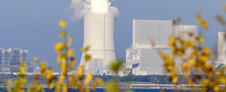
Climate protection and conservation of resources
Our research and development activities focus on climate protection and the conservation of resources. Our goal is to reduce energy requirements over buildings’ entire lifecycles and to reduce the consumption of scarce resources through the optimal generation of energy in power plants and through the high efficiency of production plants. One example of our research and development work is the interactive energy management system, with which a building’s energy consumption and energy flows are continually measured, adjusted for weather effects, analyzed and presented in a transparent manner. On this basis, any excessive energy consumption can be identified and countermeasures can be taken. By collating, analyzing and evaluating the data gained from the operation of buildings and plants,we are able to extend our expertise, allowing us to supply environmentally friendly products and services.
Bilfinger Berger is a specialist for the anchoring of offshore wind turbines and thus makes an important contribution to the use of regenerative energies. Following a number of similar projects, our Civil business segment is now installing the foundations for the new London Array offshore windpark in the outer Thames estuary, which will be the biggest offshore windpark project in Europe. In its final stage, the London Array will produce 1,000 MW of electricity, enough to cover the needs of 750,000 households.
Water consumption
Supplying the world’s growing population with clean water is one of the great challenges of the future. Bilfinger Berger provides a full range of services for both water supply and waste water. Through our maintenance and renewal services, not only do we contribute towards the supply of drinking water in Australia and the Gulf Region, but we also increase the efficiency of the plants involved. For example, the production of drinking water by seawater desalination plants was increased by five to ten percent as a result of our efforts. This resulted in up to 100,000 liters additional drinking water per hour from the plants in question, without making any additional demands in terms of primary energy. Two largescale installation projects are now being undertaken: In the Emirate of Fujeirah, the construction of a seawater desalination plant with an output of 136.5 million liters a day is approaching completion. And in Dubai, we are installing the complete piping system, the pumping equipment, bar screens and band screens for a seawater desalination plant with an output of 600 million liters a day. These plants make particularly efficient use of fossil fuels, because they are able to produce drinking water and generate electricity at the same time. The method is based on the principle of power and heat cogeneration. The fossil fuels – mainly natural gas but also oil – are burnt in a gas turbine and the steam is used to generate electricity. The gas turbine’s hot exhaust gas is passed through a boiler,which creates the process steam needed for desalination. Due to this sophisticated technique, up to 80 percent of the primary energy can be utilized.
In the field of waste-water engineering, we provide various solutions for collecting and treating waste water and sewage. Our vacuum sanitary technique uses air as a transport medium and needs significantly less water than conventional systems. We apply this innovative technology all over the world, in the field of municipal sewage as well as in building construction or refurbishments. For example, with the construction of a 20-square-kilometer artificial island in Bahrain, the vacuum system was used to collect waste water and sewage in a residential area for 11,000 people.
CO2 emissions
Through the application of advanced technologies such as flue-gas heat utilization, we exploit the potential for optimization offered by power plants and thus help to reduce their CO2 emissions. The waste heat of the flue gas is used to preheat feed water and air before the flue gas passes through the desulfurization stage. A crucial role is played by the consideration of new materials for high-performance heat exchangers.
Corrosion and wear are avoided with our newlydeveloped plastic heat-exchanger system. At the beginning of November, in the context of EU tendering, we received an order for two complete turnkey plants of a flue-gas-transfer system for the Belchatow power station in Poland. This retrofitting of one of Europe’s biggest lignitefired power plants will protect the environment. The utilization of waste heat will increase the plant’s efficiency and reduce its fuel consumption. The Belchatow power plant will thus be upgraded to meet the strict European environmental standards.
The heating and cooling of buildings are responsible for a large proportion of CO2 emissions in industrialized countries. Bilfinger Berger supplies and services modern and efficient building equipment. We contribute to the realization of building designs that protect the climate by integrating and implementing innovative technologies such as heat pumps, wood-pellet heating and geothermal heating.


